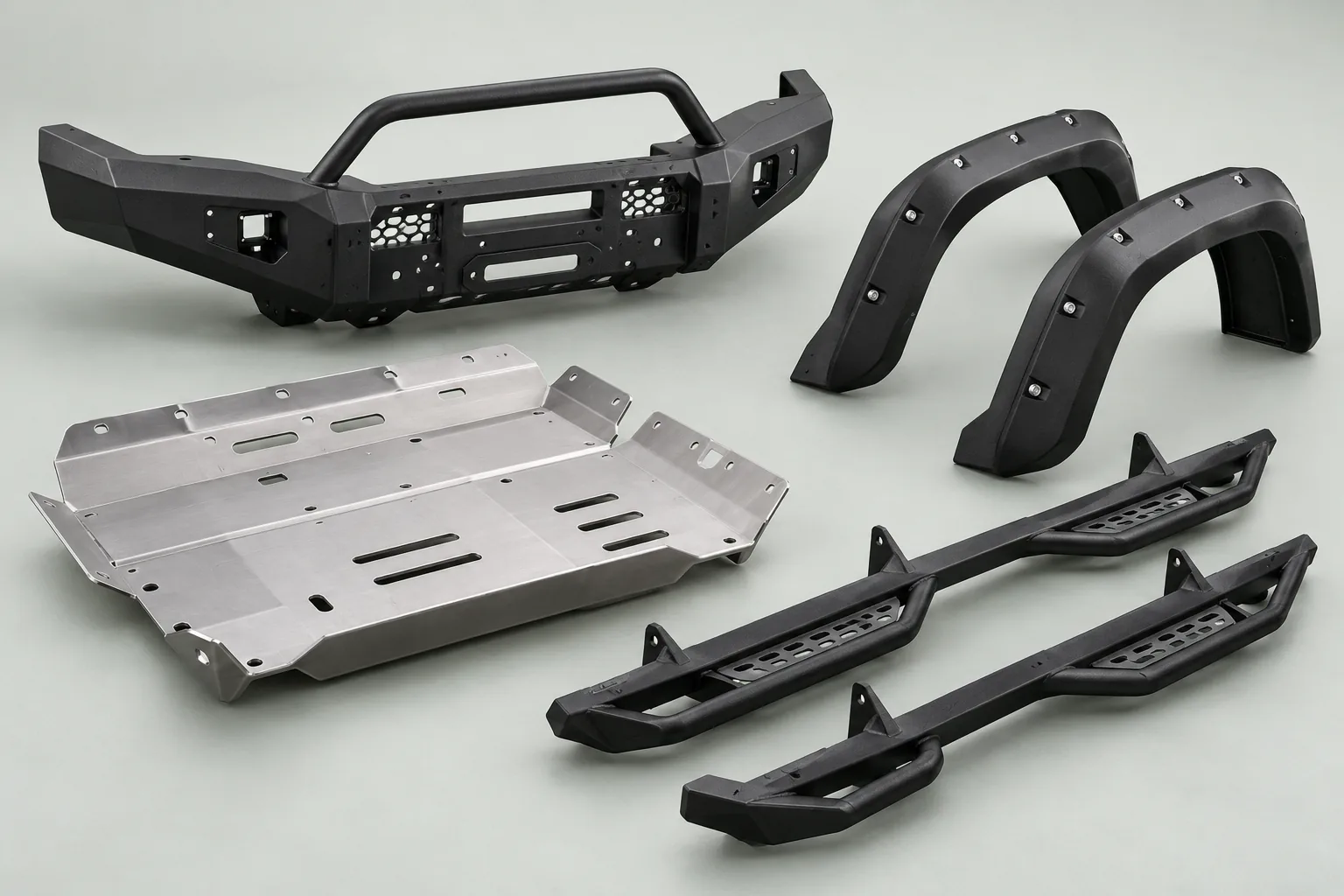
Importing Off-Road & 4×4 Parts from China to the USA
Importing automotive aftermarket parts from China can expand a distributor’s product range, support private-label growth, or reduce dependence on a single supplier. But the factory unit price rarely tells the whole story. A seemingly attractive quotation can become an unprofitable purchase once the importer accounts for duty treatment, product testing, freight, fitment-related returns, and inventory risk.
The challenge is that “automotive parts” is not one customs or regulatory category. A plastic fender liner, an aluminum roof-rack bracket, an auxiliary LED light bar, and a safety-related vehicle mounting component may raise very different questions. Buyers therefore need a product-specific import plan rather than a blanket assumption about China-origin goods.
This guide explains how US aftermarket brands, wholesalers, online retailers, and sourcing teams can structure that plan. It focuses on practical purchasing decisions, not legal or customs advice. Product classification, current tariff measures, and agency requirements should be confirmed with qualified US professionals before an order ships.
In this guide
In this guide
- Explore Related Parts Categories
- At a glance: the six decisions to make before paying a deposit
- 1. Start with a precise product definition
- 2. Determine the correct HTS classification before calculating duty
- 3. Account for additional duties without double-counting or guessing
- 4. Check product compliance separately from customs clearance
- 5. Build a landed-cost model—not a factory-price comparison
- 6. Compare Incoterms correctly
- 7. Vet the supplier's manufacturing role and evidence
- 8. Approve a reference sample before mass production
- 9. Plan inspection around real failure modes
- 10. Prepare shipping and customs documents early
- 11. Protect margin after the first shipment
- A ready-to-send import RFQ checklist
- Frequently asked questions
- Final buyer takeaway
- Sources and further reading
Explore Related Parts Categories
Use the relevant category to prepare a product brief, then select the sourcing support you need.
At a glance: the six decisions to make before paying a deposit
- Define the exact part and intended vehicle or use—not just its marketing name.
- Confirm the likely US HTS classification and all applicable duty measures with a customs broker.
- Identify whether safety, emissions, marking, intellectual-property, or other agency rules apply.
- Establish a measurable technical specification, approved reference sample, and quality plan.
- Compare quotations on a consistent Incoterms basis and calculate landed cost.
- Agree on the importer of record, filing responsibilities, documents, and remedies for nonconforming goods.
Skipping any one of these steps can undermine the apparent saving from a lower purchase price.
1. Start with a precise product definition
Before asking a supplier for a “quote on auto parts,” create an SKU-level brief. At minimum, the brief should explain the part’s construction, function, vehicle application, materials, country of manufacture, and commercial packaging. Photographs help, but photographs do not replace dimensions or engineering requirements.
For a custom off-road skid plate, the brief should identify the target year/make/model/trim, chassis reference, mounting-point geometry, aluminum or steel grade, supplied brackets and fasteners, and packaging quantity. For a roof-rack assembly, it must additionally state the exact mounting interface, complete installed configuration, load assumptions, and required validation evidence. For electrical equipment, the technical and regulatory questions may be different again.
A useful starting specification includes:
| Data field | Why the importer needs it |
|---|---|
| Product name and function | Separates merchandise categories that may receive different customs treatment |
| Drawing, dimensions, and photographs | Prevents pricing against unlike products |
| Materials and construction | Informs classification review, durability, and manufacturing capability |
| Target vehicles and years | Defines fitment verification and listing accuracy |
| Brand and artwork authorization | Identifies trademark and packaging permissions |
| Country of origin and manufacturing process | Supports origin review and trade-remedy analysis |
| Intended US sales channels and use | Helps identify applicable legal, safety, and emissions issues |
| Volume, packaging, and shipping method | Determines logistics and quotation comparability |
An OE part number can be a useful reference point, but it is not proof that an independent aftermarket item is equivalent. See LedgeGear 4×4’s OE part numbers and fitment guide for a deeper discussion.
2. Determine the correct HTS classification before calculating duty
US Customs and Border Protection administers classification at import, while the US International Trade Commission publishes the Harmonized Tariff Schedule of the United States (HTSUS). Buyers should not assume that every product sold on an automotive website belongs in a single Chapter 87 heading. Classification depends on the actual merchandise and the legal tariff rules, and can be affected by its material, function, and whether a more specific heading applies.
Ask your customs broker to review a technical product description, drawings, composition, photos, and manufacturing details. Confirm the full tariff classification and the rationale, then retain it in the SKU master record. A supplier’s export HS code is useful supporting information, not a final determination of the US import classification.
As of October 21, 2026, the USITC lists 2026 HTS Revision 21, released October 9, 2026, among its revisions. That date illustrates why old duty screenshots and generic online tariff calculators are unreliable for live purchasing decisions. Always consult the edition effective for the relevant entry date and the official measures applicable at that time.
A disciplined classification workflow is:
- Identify the exact product, not a broad family label.
- Review the candidate heading and explanatory description with a broker.
- Check whether additional tariff provisions or trade measures apply to that classification and origin.
- Evaluate any applicable exclusions, exemptions, or special measures against their specific conditions.
- Save the date, classification analysis, evidence, and responsible reviewer.
- Reconfirm before entry if laws, composition, origins, or classifications change.
For high-value or uncertain product lines, consider whether a formal CBP binding ruling is appropriate. Do not write “zero duty” or a fixed percentage into a customer-facing pricing model until the relevant treatment has been verified.
Official starting point: USITC Harmonized Tariff Information.
3. Account for additional duties without double-counting or guessing
The ordinary tariff rate is not necessarily the entire duty exposure. Depending on classification, origin, trade-remedy scope, and current law, other measures may apply. Some measures have product-specific exceptions or special rules about interaction with other duties.
For automotive importers, this makes three assumptions especially risky: that every Chinese auto part faces the same additional tariff, that an old tariff rate still applies, or that tariff percentages can simply be added without checking the governing rules. US trade policy changed repeatedly during 2025 and 2026, including measures involving automobiles, auto parts, and metals. The correct calculation is therefore SKU-specific and entry-date-specific.
Request from your broker a written landed-duty worksheet showing each applicable tariff provision and the supporting authority. If a factory supplies several unrelated part categories, review representative SKUs from every distinct classification group. A duty conclusion for plastic liners must not automatically be reused for aluminum hardware or electrical assemblies.
A broker can also help assess anti-dumping or countervailing duty exposure when the facts warrant it. Such measures are not universal to all auto parts, but their potential financial consequences are material enough to rule out assumptions.
4. Check product compliance separately from customs clearance
A shipment being cleared by customs does not mean the product is appropriate, safe, or lawful to market for every vehicle and every use. US aftermarket products may implicate different government agencies and requirements.
Motor vehicle safety
The National Highway Traffic Safety Administration (NHTSA) administers Federal Motor Vehicle Safety Standards (FMVSS). Some replacement equipment is subject to specific requirements; other accessories may not have a product-specific FMVSS. That absence does not eliminate obligations concerning safety-related defects or recalls. It also does not authorize commercial installers to render compliant vehicle safety equipment inoperative.
Practical implication: do not accept a supplier’s generic “DOT approved” claim as proof. Request the precise standard, product scope, test evidence, responsible manufacturer, and applicable certification basis. Determine whether the product itself is regulated and whether its installation could affect another regulated vehicle system.
Regulatory exclusions and emissions-related components
US EPA rules prohibit certain emissions-control tampering and defeat devices. LedgeGear 4×4 does not focus on emissions-related tuning products; buyers should separately verify the obligations of any regulated automotive product. For California sales, applicable California Air Resources Board (CARB) requirements may create further obligations; an Executive Order (EO), where relevant, applies to the identified products and vehicle applications, not to every product a manufacturer sells.
Do not infer that a part is road legal merely because a catalog calls it a racing part or because a supplier presents a generic certificate. Have a qualified specialist confirm the intended US application before committing to inventory.
Country-of-origin marking and intellectual property
US origin-marking requirements and exceptions depend on the goods and circumstances. Review durable marking, packaging, and documentation with the broker rather than relying on an unverified “Made in China” sticker arrangement. Logos, OE branding, protected designs, and third-party trademarks likewise require authorization. An aftermarket-compatible description is not permission to reproduce another manufacturer’s branded packaging.
Other relevant issues
Depending on the item and transaction, buyers may need to examine forced-labor import restrictions, metal-related measures, electrical or chemical requirements, or packaging rules. The right approach is a product-by-product compliance matrix identifying who owns each verification task.
5. Build a landed-cost model—not a factory-price comparison
A complete landed-cost model should answer what it costs to put one saleable unit into your US warehouse. A useful structure is:
Landed cost per accepted unit =
(merchandise value + applicable duties and fees + international freight + insurance + origin/destination handling + customs/broker charges + inland delivery + inspection/testing + allocated tooling or development + other attributable costs) ÷ accepted saleable units.
This is a planning framework, not a customs valuation formula. Customs value and accounting inventory cost are separate concepts; confirm their treatment with the relevant advisers.
Consider the following hypothetical illustration, not a market quote or current tariff estimate:
| Cost item | Illustrative amount |
|---|---|
| 1,000 units at $12 factory price | $12,000 |
| International freight and insurance | $1,800 |
| Duties and import fees, assumed for illustration | $2,400 |
| Broker, terminal and inland charges | $950 |
| Inspection and sample allocation | $350 |
| Total | $17,500 |
At 1,000 accepted units, the illustrative landed cost is $17.50 per unit, not $12. If 50 units are non-saleable, the same spend spread across 950 accepted units is approximately $18.42 per unit, before returns, storage, customer service, or selling fees. This is why testing and fitment quality belong in the commercial model.
For eCommerce products, add fulfillment, marketplace fees, return shipping, and warranty reserves to determine contribution margin. For wholesale accounts, add case quantities, retailer chargebacks where applicable, credit terms, and inventory holding costs.
6. Compare Incoterms correctly
International quotations cannot be compared fairly if one supplier quotes Ex Works (EXW), another quotes Free on Board (FOB), and a third quotes Delivered Duty Paid (DDP). Under Incoterms 2020, these terms allocate different delivery responsibilities, costs, and risks. They do not by themselves settle ownership, payment terms, or every customs question.
EXW may place substantial export and pickup responsibilities on the buyer; FCA is often worth discussing where the buyer controls carriage. FOB is intended for sea and inland-waterway transport, not automatically for every containerized multimodal movement. DDP gives the seller extensive import-side obligations, but buyers should verify that the seller can lawfully and operationally fulfill them and identify the importer of record.
Always specify the named place and version, for example “FCA [named facility], Incoterms 2020,” in commercial documentation. Ask a freight forwarder or broker to recast competing offers onto the same destination-cost basis.
Reference: ICC Incoterms 2020.
7. Vet the supplier’s manufacturing role and evidence
A clear quotation is not evidence that the vendor manufactures the item or controls its production. Distinguish the sales entity, factory, subcontractors, tooling owner, and final inspection location. Traders can add value, but visibility into actual manufacturing capability matters when buyer-defined specifications are involved.
For each shortlisted supplier, request an appropriately scoped evidence package:
- Legal entity and commercial contact information.
- Actual manufacturing processes performed in-house and outsourced.
- Factory or production-line photographs tied to the relevant process.
- Product drawings, material data sheets, and available test reports.
- Quality management and calibration records applicable to the operation.
- Prior product-category experience, without assuming unnamed customers prove quality.
- Change-control process for tooling, materials, and subcontractors.
- Defect handling, corrective-action process, and traceability arrangements.
Do not treat an ISO certificate as a warranty of product conformity. Verify the certificate’s issuer, current status, covered site, and scope, then separately inspect the product-specific evidence.
LedgeGear 4×4’s supplier research and review service can be used as a starting point for discussing supplier evaluation.
8. Approve a reference sample before mass production
A sample approved only by appearance leaves major risks unresolved. A buyer should document what the sample demonstrates—and what it does not demonstrate.
For vehicle-specific components, establish an approved fitment matrix and inspect representative application vehicles or reliable fixtures where feasible. For load-bearing or safety-related products, arrange suitable engineering tests with competent providers. For cosmetic items, define finish, color, surface defects, and packaging expectations with objective acceptance criteria.
Keep a signed golden-sample record: sample ID, drawing revision, material, color, photos, measured characteristics, deviations accepted in writing, and approval date. If the supplier modifies the mold, resin, extrusion source, weld design, or hardware after approval, require a documented review before shipment. A pre-production sample does not prove every production lot will conform.
9. Plan inspection around real failure modes
Inspection should follow product risk rather than a generic checklist copied across categories.
| Product category | High-value checks before shipment |
|---|---|
| Plastic splash shields | Mounting geometry, resin grade, clip fit, warpage, surface finish |
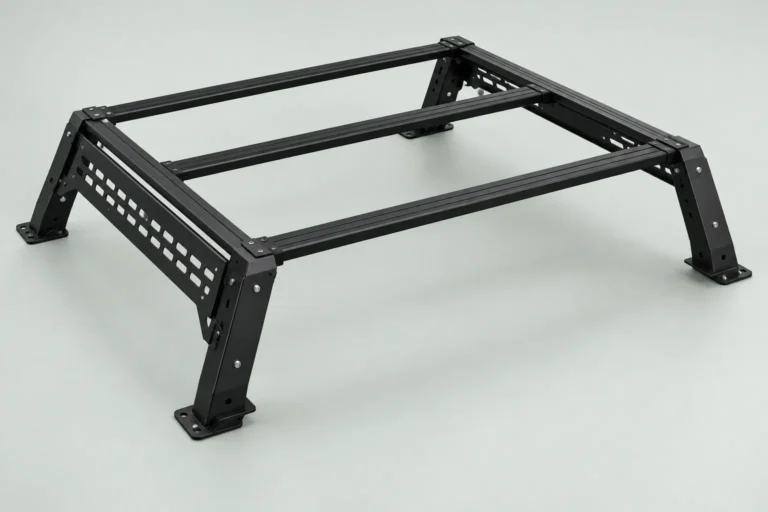
| Roof-rack hardware | Hole positions, fasteners, protective finish, assembly configuration, traceable load-test evidence |
| Recovery boards and mounts | Material specification, dimensions, retention method, mounting hardware and relevant test evidence |
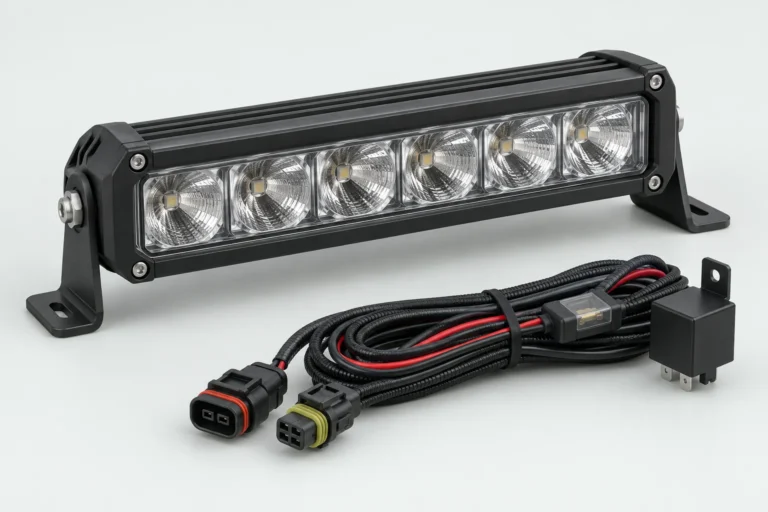
| Electrical harnesses | Pinout, connector engagement, insulation, continuity, harness routing |
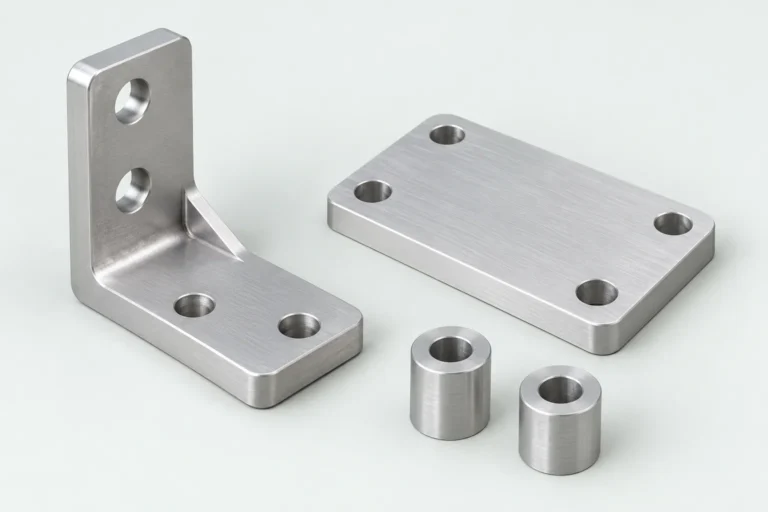
| Machined brackets | Drawing revision, critical tolerances, thread gauges, surface treatment |
Where appropriate, agree on sampling levels, acceptable quality limits, test methods, and who pays for reinspection. Sampling is not a substitute for qualification of features whose failure could cause significant harm. Record lots and cartons so nonconforming items can be identified and contained.
10. Prepare shipping and customs documents early
For a commercial shipment, the broker and forwarder may require a commercial invoice, packing list, transport documents, entry data, and any product-specific supporting evidence. Documents should align on descriptions, quantities, values, country of origin, parties, and purchase terms. Inconsistent descriptions such as “car accessories” for a highly specific product create avoidable questions.
For applicable vessel cargo, Import Security Filing (ISF) must generally be arranged before loading within the relevant CBP deadline. CBP describes the common 24-hours-before-vessel-loading requirement for US-bound cargo. The importer should identify the filing agent and provide the required data in time; sending it after departure may be too late.
Confirm with the broker who is the importer of record, who posts the required bond, who manages recordkeeping, and how corrections or examinations will be handled. A forwarder arranging transport does not automatically assume every legal responsibility of the importer.
Reference: CBP ISF filing timing.
11. Protect margin after the first shipment
The first successful entry is the start of supplier management, not the finish. Track accepted units, returns by failure mode, replacement shipments, freight damage, and lot-level complaints. Many aftermarket products fail commercially because of listing or application inaccuracies rather than obvious factory defects.
Use a supplier scorecard with a few stable measures: on-time shipment, first-pass acceptance, defect rate by severity, response time to corrective actions, document accuracy, and total landed cost. Compare these across orders and record what changed. If returns concentrate in one vehicle configuration, freeze the affected fitment claim rather than continuing to sell based on a broad catalog description.
A ready-to-send import RFQ checklist
Send shortlisted suppliers a single file containing:
- Product identifier, intended function, and target vehicles.
- Drawings, materials, finishes, and critical characteristics.
- Annual demand estimate and first-order quantity, separately identified.
- Requested quotation tiers, sample pricing, lead times, and Incoterm with named place.
- Testing, inspection, traceability, and change-notification requirements.
- Carton dimensions, net/gross weight, labeling, and brand artwork authorization.
- Manufacturer identity and manufacturing country for each SKU.
- Tooling ownership, warranty/defect remedies, and acceptable payment milestones.
Keep customs classification and US legal determinations with the importer and qualified advisers; do not delegate them to a salesperson without independent review.
Frequently asked questions
Is it legal to import aftermarket car parts from China into the US?
Many aftermarket parts can be imported legally, but legality depends on the exact item, applicable customs measures, other agency requirements, IP rights, and the intended use. There is no universal approval that covers all auto parts.
What import duty applies to auto parts from China in 2026?
There is no single reliable answer for every part. Obtain the current HTSUS classification and evaluate additional measures, exclusions, and interactions for the product and entry date. Use a licensed customs broker and current official guidance; avoid using a generic percentage from an old article.
Can a Chinese supplier quote DDP to your US warehouse?
A supplier may offer DDP, but the parties must verify who can meet the import obligations, serve as importer of record as applicable, and provide transparent duty and documentation records. DDP is not automatically the safest or cheapest structure.
Does a supplier’s CE or ISO certificate prove US automotive compliance?
No. A management-system certificate, general laboratory report, or foreign-market marking does not automatically establish compliance with US product-specific law. Review the exact applicable rules, test scope, manufacturer responsibility, and evidence.
Should you order a full container to reduce unit costs?
Not before product approval, demand validation, landed-cost analysis, and cash-flow planning. A lower freight cost per item can be outweighed by excess inventory or fitment-related returns.
Final buyer takeaway
Successful China-to-US aftermarket sourcing starts with product definition, classification, compliance, technical proof, and realistic landed cost. Supplier quotations matter—but only after the buyer knows precisely what is being bought and how the product can enter and be sold in the US.
LedgeGear 4×4 supports buyers with potential supplier research, quotation comparisons, sample coordination, customization communication, and order follow-up. Buyers remain responsible for approving suppliers and products and obtaining any needed technical, legal, customs, or regulatory advice. If you have an automotive SKU list or a quotation that needs a structured review, share your sourcing requirements.
If you are planning an off-road product range, share the parts you want to source or the drawings you want made. LedgeGear 4×4 can help research potential manufacturers, organize quotations and samples, and coordinate agreed production follow-up while you arrange the relevant import and technical advice. Explore custom manufacturing coordination or discuss your sourcing project.
Sources and further reading
- USITC — Harmonized Tariff Information (2026 revisions)
- CBP — What are the requirements to import specific goods?
- CBP — ISF timing for vessel cargo
- NHTSA — Safety-related defects and aftermarket motor vehicle equipment
- EPA — Aftermarket defeat devices and tampering
- CARB — Manufacturers of Aftermarket Parts
- ICC — Incoterms 2020
Editorial note (October 21, 2026): Tariff law and agency guidance can change. Confirm the rules in force at the time of entry and marketing. This article is general purchasing information, not customs, engineering, or legal advice.