Sourcing Off-Road Parts from China: Fitment and Quality for Jeep, Bronco & 4Runner
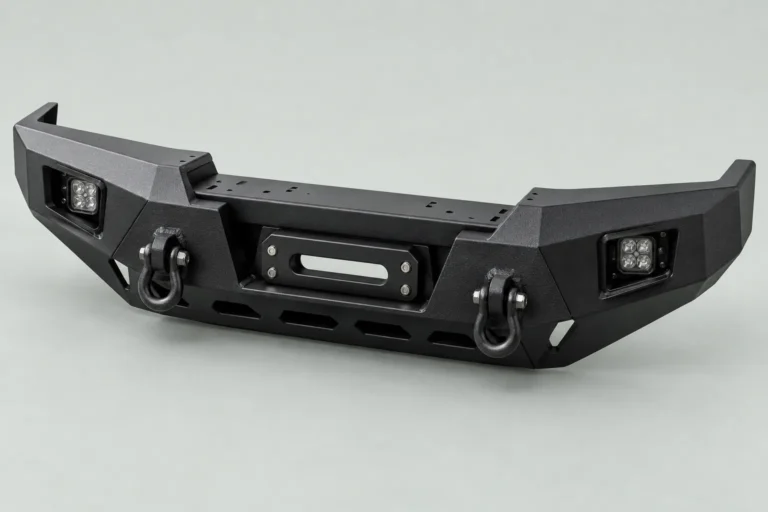
Two steel bumpers can look nearly identical in supplier photographs. One may mount cleanly on a specific vehicle; the other may interfere with parking sensors, a front camera, factory recovery points, or a trim-specific grille. For an off-road accessories brand, that difference is more consequential than a small saving on the quoted unit price.
China sourcing for Jeep Wrangler, Ford Bronco, Toyota 4Runner, and other 4×4 platforms can work for established wholesalers and smaller aftermarket brands alike. The challenge is turning a general product idea into a repeatable, vehicle-specific purchase specification. This guide focuses on the questions overseas buyers should resolve before placing a bulk order.
In this guide
- Explore Related Parts Categories
- Start with the vehicle application, not the product photograph
- Choose a product category with a manageable failure cost
- Check who designs, manufactures, and assembles the product
- Write an RFQ that makes quotations comparable
- Treat vehicle fitment testing as a release gate
- Plan coating, corrosion, and shipping checks before production
- Keep compliance responsibilities separate from supplier marketing
- A practical first purchase plan
- Frequently asked questions
- How LedgeGear 4×4 can support your project
- Related Sourcing Support
Explore Related Parts Categories
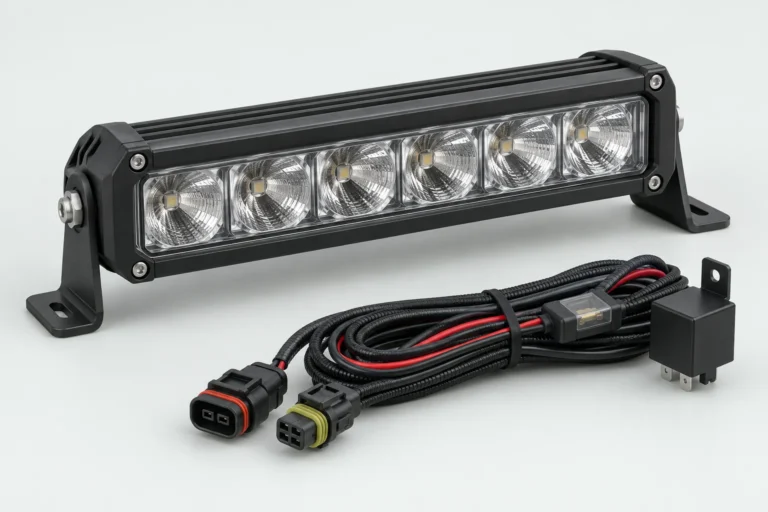
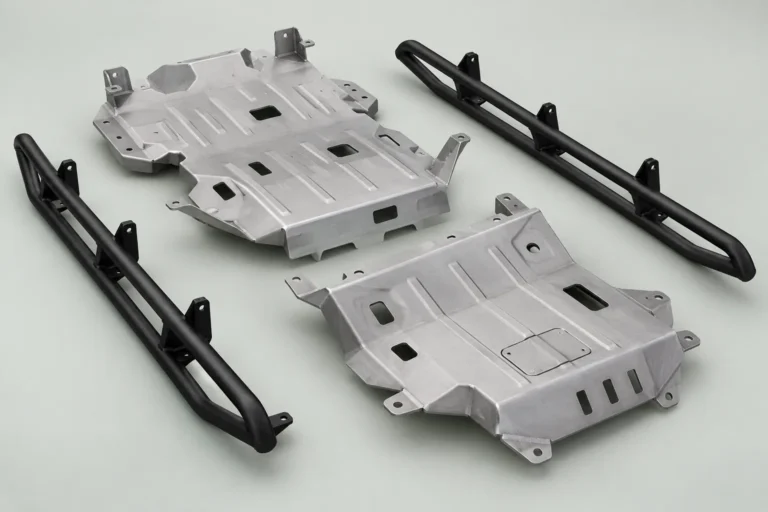
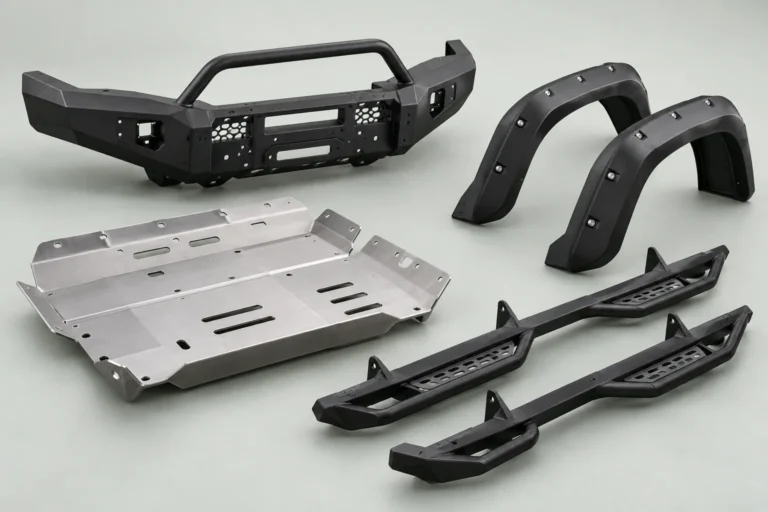
Use the relevant category to prepare a product brief, then select the sourcing support you need.
Start with the vehicle application, not the product photograph
“Fits Jeep Wrangler” is not a sufficient fitment description. A useful application record identifies the model, generation, model years, trim or body configuration, and any relevant factory equipment. For some products, the exact market and right-hand-drive versus left-hand-drive configuration also matter. Factory tow packages, sensors, camera placements, bumper options, wheel sizes, and modifications already fitted to the vehicle can change the installation outcome.
Build a fitment matrix before requesting quotations. For a bumper or rack, this could include:
- Vehicle model, generation, production/model-year range, and target market.
- Body style, relevant trims, factory bumper or roof-rail configuration.
- Mounting locations, hole pattern, clearances, and hardware requirements.
- Parking sensors, cameras, lighting, radar, airbags, or driver-assistance equipment that must remain functional.
- Whether cutting, drilling, calibration, or relocation of factory components is required.
Ask the supplier to mark each fitment claim as confirmed by physical installation, based on a drawing, or not yet validated. These are very different levels of evidence. A catalog claim should not silently become a guarantee.
Choose a product category with a manageable failure cost
Off-road accessories are not a single manufacturing category. Roof racks, side steps, skid plates, storage brackets, bumpers, recovery hardware, and suspension-related components involve different suppliers, processes, and liabilities.
Consider a practical sequence for a new private-label range. A non-structural storage bracket may allow simpler sampling than a load-bearing recovery point. A cosmetic trim part may be easier to introduce than a component that affects crash performance or driver-assistance sensors. This does not make any product risk-free, but it helps a new brand match product complexity to its testing capacity.
For steel or aluminum fabricated accessories, questions include material grade, plate or tube thickness, weld quality, corrosion protection, mounting hardware, and the consistency of the assembly fixture. For injection-molded trim, tooling accuracy and surface appearance may dominate. For textile accessories, stitching, material durability, and attachment methods become more important.
Check who designs, manufactures, and assembles the product
A supplier offering many 4×4 accessories may be a factory, a trading company, or an assembler using several upstream manufacturers. Any of these relationships can be workable. What matters is whether the supplier can explain which operations it controls and how product changes are communicated.
Ask where the relevant processes occur: cutting, bending, welding, coating, final assembly, and packing. For a fabricated bumper, request sample photos of welds, mounting brackets, coating, and the underside—not just a polished front-facing marketing photograph. Ask whether the supplier owns the drawings or merely resells a current catalog item. If you commission modifications, agree in writing who owns the resulting design files and tooling.
Supplier claims should be checked against available documents and targeted questions rather than treated as independently verified manufacturing capability.
Write an RFQ that makes quotations comparable
A low quote is difficult to evaluate if it excludes mounting hardware, cartons, or surface treatment. Send the same RFQ to each potential supplier. Include the target fitment matrix, material and finish requirements, estimated initial and repeat quantities, packaging expectations, delivery destination, and sample requirements.
Request a quotation broken down into unit price, MOQ, sample charge, tooling or fixture charge, branding, packaging, lead time, and trade terms. Clarify whether quoted delivery terms refer to the same location and scope. A price described as FOB without a named port is not fully comparable to a clearly defined EXW quote. Freight, duty, testing, inspection, and damage allowance also affect landed cost.
For example, Supplier A may quote a lower bumper price but require custom packaging and hardware as extras. Supplier B may quote more per unit but include both, together with a better-defined sample process. The decision should be made using the same specification and cost boundaries.
Treat vehicle fitment testing as a release gate
A visual sample review is not enough for vehicle-specific aftermarket parts. Where practical, arrange a controlled trial installation on the exact application or a documented representative vehicle. Record the vehicle details, installation time, photographs, interferences, supplied tools, fasteners, and adjustments required.
Checks should reflect the part: door and tailgate clearance for carriers; hatch and antenna clearance for racks; steering, tire, and suspension articulation clearance for relevant accessories; access to factory service points for underbody protection. For structural, recovery, load-bearing, or safety-related products, competent engineering assessment and appropriate testing are essential. An informal installation is not a substitute.
Record changes as Sample V1, V2, and so on. Reconfirm whether the production order will match the approved version—including hardware and packaging. If a supplier changes a bracket during production, a previously approved exterior appearance does not resolve the change.
Plan coating, corrosion, and shipping checks before production
Parts destined for snowy roads, coastal climates, or outdoor storage may experience corrosion exposure very different from a showroom sample. Define the required finish, surface preparation, acceptance criteria, and any relevant testing instead of relying on the generic label “powder coated.” Ask how welds, cut edges, cavities, and fasteners are protected.
Bulky metal products also create packaging problems. Carton dimensions affect freight cost; inadequate protection can damage coated corners and brackets in transit. Request a packing plan with gross weight, carton dimensions, protective materials, hardware bags, product labels, and spare-parts identification. Consider an independently arranged pre-shipment inspection against an agreed checklist where the risk justifies it.
Keep compliance responsibilities separate from supplier marketing
Import permission, vehicle legality, product safety, and insurance requirements depend on the destination and the actual use of the component. A part marketed as “off-road” is not automatically exempt from every rule. Assess products that may affect vehicle safety systems, emissions, lighting, or structural performance with qualified specialists for the target market. Avoid advertising unverified load ratings or universal compatibility.
For context, SEMA’s 2026 market report overview highlights pickup customization as a major part of the U.S. specialty-equipment industry. Market opportunity, however, does not remove the need for fitment and quality discipline.
A practical first purchase plan
- Choose one platform and two or three SKUs. Avoid an oversized universal catalog for the first purchase.
- Create the fitment and specification matrix. Separate verified details from open questions.
- Shortlist suppliers and compare like-for-like quotes. Record processes, inclusions, exceptions, and delivery terms.
- Evaluate samples and installation evidence. Approve a controlled product version, not just a photo.
- Define inspection and packaging criteria. Make them part of the purchase agreement before production.
Frequently asked questions
Can one Chinese supplier cover Jeep, Bronco, and 4Runner accessories?
Possibly, but a broad catalog does not establish that every item comes from the same production facility or has been fitment-tested. Review each product family and application separately.
Is an OEM or ODM order necessary to launch a brand?
No. Many buyers begin with existing products, subject to authorized branding and design rights, then customize packaging or selected features after initial validation. Tooling-heavy development is better justified by a clear product and sales plan.
What should an overseas buyer request before the first deposit?
A written product and fitment specification, quotation inclusions, sample approval method, production and payment milestones, packaging requirements, and an agreed process for handling defects or deviations.
How LedgeGear 4×4 can support your project
LedgeGear 4×4 helps buyers organize supplier research, compare quotations, coordinate samples and feedback, and communicate product requirements with Chinese suppliers. If you are evaluating an off-road accessories range, prepare your target vehicle applications, estimated order quantities, and current drawings or reference products, then send a sourcing request. Technical testing, regulatory review, and independent inspection can be scoped separately with appropriate specialists.
Start with your vehicle platform, a product photo or link, an original drawing or an idea for an accessory. LedgeGear 4×4 can help find manufacturers for existing products or custom parts and coordinate quotations, sample revisions and agreed production updates. Explore custom manufacturing coordination or discuss your sourcing project.
Related Sourcing Support
Off-road accessories sourcing · Sourcing services · Send your product request