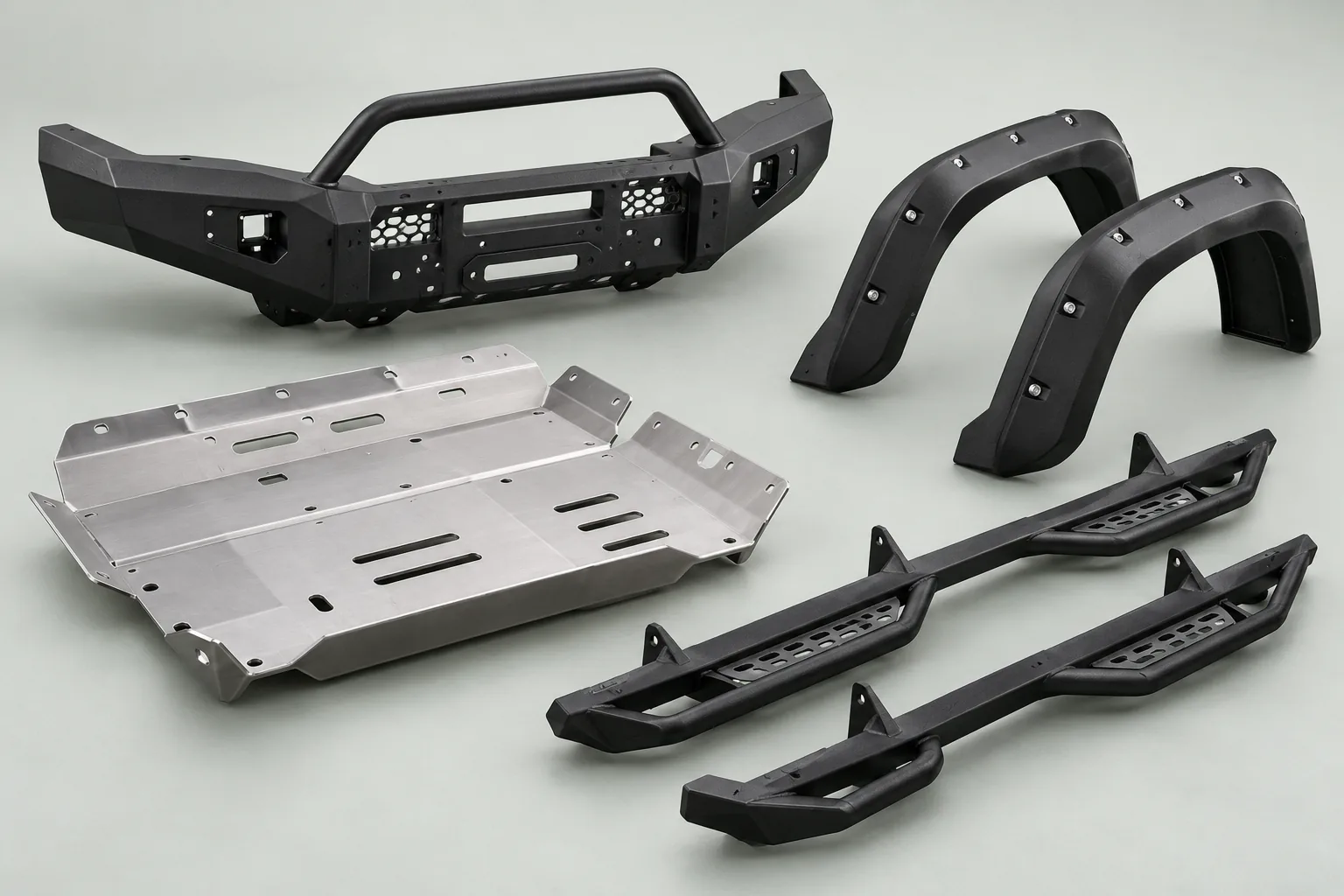
Powder Coating and Corrosion Protection for Off-Road Metal Parts: Supplier Checklist
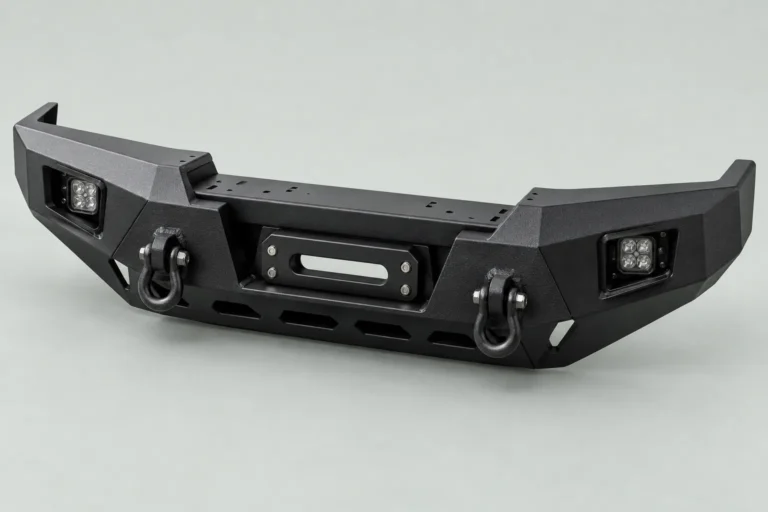
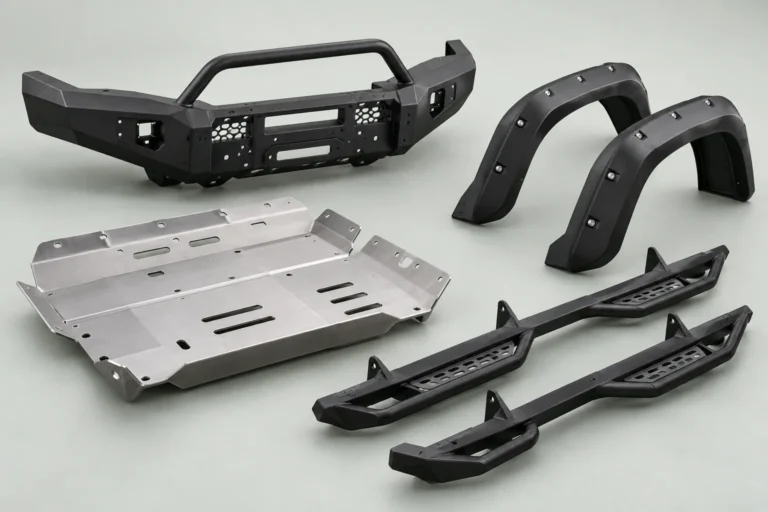
Off-road brackets, steel bumpers, underbody armor and roof racks operate in abrasive, wet and frequently contaminated environments. A coating can look attractive on a showroom photograph yet fail in service if the metal preparation, drainage, joint construction, edge condition or packaging was inadequate. Buyers coordinating metal parts with a manufacturer in China need a finish specification tied to the product design and the intended North American market. This guide explains what to ask without inventing coating thicknesses, salt-spray claims or certifications that have not been confirmed for the actual factory and part.
Buyer context: Illustrative sourcing guidance, not an independent test report, verified product rating, supplier certification or LedgeGear 4×4 customer case.
In this guide
- Coating starts with part design
- Confirm the base material and surface condition
- Pretreatment is a separate inspection step
- Specify the finish beyond color
- Edges, welds and cavities deserve attention
- Think about galvanic and contact issues
- Agree an inspection method before production
- Protect the finish in shipping
- Control dimensions after coating
- Build the coating into the quotation
- A practical first-article review
- Common finish RFQ mistakes
- Frequently Asked Questions
- Buyer Resources and Next Steps
Coating starts with part design
A powder coat cannot compensate for an interface that traps water indefinitely or a welded cavity with no drainage plan. Inspect internal corners, overlapping plates, weld joints, blind holes, edges and contact surfaces during the design review. Ask whether a proposed process can access recessed regions and whether the assembly must be coated before or after final welding. Consider how transport and installation will affect the finish. A corrosion target should be framed as a design requirement supported by an appropriate test plan, not as a generic ‘rustproof’ promise.
Confirm the base material and surface condition
The preparation sequence depends on actual substrate and manufacturing history. Steel, aluminum and mixed-material assemblies may need different treatments. Cutting, forming and welding can leave scale, oils, sharp edges or local surface differences that change coating adhesion. Ask the factory how it removes contaminants, controls sharp edges and verifies cleanliness before coating. Material identification matters: a quotation with unspecified steel grade and coating leaves too many manufacturing variables open. The buyer should record approved material alternatives and pretreatment changes as controlled revisions.
Pretreatment is a separate inspection step
Degreasing, cleaning, conversion treatment, abrasive preparation or other processes may be used depending on the substrate and desired coating system. It is not enough to write ‘powder coated’ in the RFQ. Ask the manufacturer to state its proposed pretreatment sequence and which process steps are performed on site or subcontracted. The appropriate approach depends on corrosion exposure, geometry and finish chemistry; do not mandate an arbitrary sequence without technical justification. Require the supplier to describe how process conditions and consistency are monitored and what records are available.
Specify the finish beyond color
A production-ready finish request distinguishes surface appearance, texture, gloss, color tolerance, masking, desired protection, visible surface class and functional contact areas. Specify whether threaded holes, precision mounting faces or ground points should be protected or processed differently. Powder application can change finished fit dimensions; a bolt that passes through an untreated prototype may bind after coating. Ask for a coated first article with actual assembly checks. Private-label buyers should approve a physical finish sample where color/texture consistency is commercially important.
Edges, welds and cavities deserve attention
Coating failure often initiates where geometry is difficult: sharp edges, weld toes, inside corners and component overlaps. Fabricators should discuss edge treatment, weld spatter removal, crevice construction, drainage and the need to avoid bare exposed contact areas. Ask who inspects the assembly before it leaves fabrication and how it is supported through the coating process. Rework after coating can create fresh corrosion concerns. A manufacturer should identify any areas not practically covered by its proposed method rather than promising uniform coverage everywhere.
Think about galvanic and contact issues
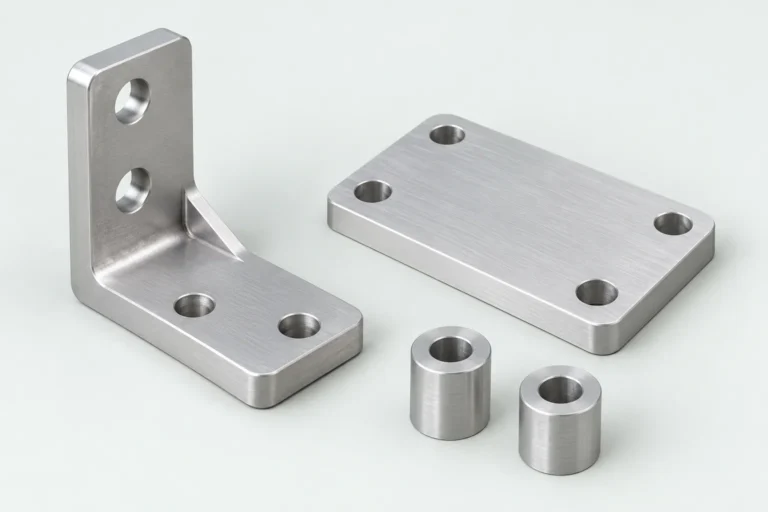
A painted steel bracket mounted to an aluminum structure can still experience issues when protective barriers are damaged or different metals form electrical contact in a wet environment. The correct approach is design-specific and may involve compatible fasteners, isolation washers, sealing or controlled contact areas. Coating or hardware changes can affect joint function, torque and maintenance. Buyers should involve the responsible engineer when corrosion strategies interact with structural connections. Avoid assuming stainless hardware automatically resolves every mixed-metal problem.
Agree an inspection method before production
Define what evidence is necessary for appearance, coverage, adhesion and corrosion-related performance. Tests should be selected by competent parties for the actual application and intended environment. When the buyer requires a specified standardized test, identify the applicable method, sample conditioning, acceptance criteria and who will perform it. A supplier saying it ‘passes salt spray’ without the exact test, duration, evaluation criteria and report is providing an incomplete claim. Record acceptance rules before the first article arrives, not after a dispute.
Protect the finish in shipping
Off-road parts are commonly heavy or awkwardly shaped. A coated plate can arrive scratched when edges contact other components or poorly controlled fasteners are bagged loose. Ask for separators, protection for tabs and corners, a hardware pack, carton reinforcement and packed-dimension details. Confirm whether product labels and installation instructions may contact delicate surfaces. Review shipping photos and one unpacking trial. Damage in transit should be documented separately from manufacturing finish defects so responsibility and corrective action can be addressed.
Control dimensions after coating
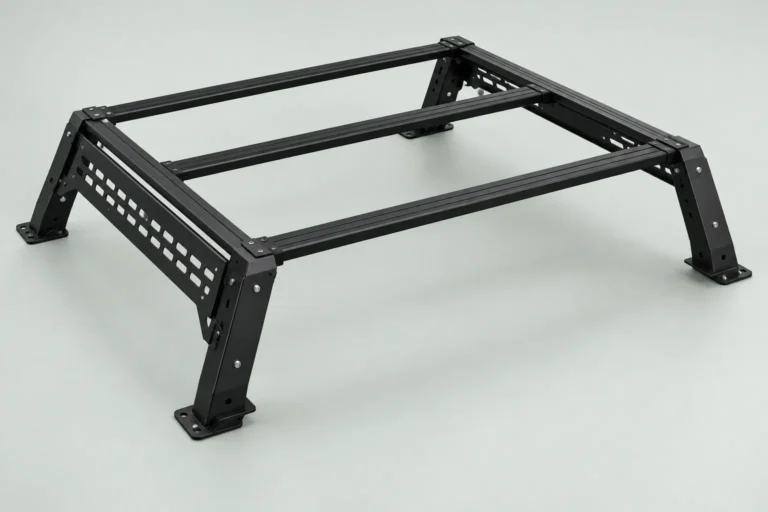
A coating system adds thickness and may affect slots, holes, tapped features, brackets and mating surfaces. Manufacturing drawings should identify functional dimensions that apply in the finished condition and any areas requiring masking. Ask whether post-coating inspection uses the same datum system as the design. For multi-part racks or recovery mounting components, test assembly with actual supplied fasteners and vehicle-specific parts where applicable. A dimensional report from uncoated metal does not substitute for final assembly approval.
Build the coating into the quotation
Compare suppliers on pretreatment, coating type, color and texture, handling, inspection, masking, packaging and any required third-party tests. Distinguish unit price from special setup, batch color change, rework and sample cost. Where multiple bracket variants share one color, ask how batches are controlled and labeled. Do not assume two powder-coated products have equivalent corrosion durability because they look identical. The actual quote should disclose subcontracted finishing and the identity of whoever holds production quality responsibility.
A practical first-article review
For an illustrative bed-rack bracket project, the buyer requests one approved drawing revision, a sample made with production-intent pretreatment and coating and a basic inspection log. The sample is checked for edge coverage, masking, color, finished interface dimensions and packaging. Any required environmental testing is handled as a separate agreed activity. Only after reviewing the evidence does the buyer consider a production release. This describes a hypothetical process, not a factory result or completed LedgeGear 4×4 order.
Common finish RFQ mistakes
Do not write only ‘black powder coat, good quality.’ Avoid copying a generic corrosion claim without knowing the test. Do not check only large outer panels while ignoring welds and internal brackets. Never assume a supplier’s material substitution has no impact on pretreatment. Do not approve an uncoated sample for dimensions and assume the coated production part will assemble exactly the same way. Capture these questions while comparing manufacturers, when changes cost less than after a bulk shipment.
Frequently Asked Questions
Is one powder coat specification suitable for every off-road part?
No. Material, design geometry, service environment, joining method and required protection determine the appropriate finishing system and inspections.
Does a successful appearance inspection prove corrosion durability?
No. Visual finish quality is only one part of coating evaluation. Environmental performance and adhesion need suitable, defined evidence when required.
Should the factory quote coating separately?
At minimum the quotation should disclose the finish scope, preparation assumptions, masking, sample costs and any exclusions so buyers can compare complete requirements.
Buyer Resources and Next Steps
- Off-road armor parts and protection
- Roof and truck bed racks
- Buyer sample inspection checklist
- Download RFQ forms
For a practical manufacturer discussion, bring your reference product, authorized drawing, application, estimated order quantity and destination. Clarify technical assumptions before relying on any quotation.