Steel vs Aluminum for Off-Road Accessories: A B2B Manufacturing Guide
The question ‘Should this off-road part be steel or aluminum?’ cannot be answered by comparing material weight alone. A rack foot, skid plate, bumper shell and underbody bracket operate under different loads and manufacturing constraints. For North American aftermarket buyers sourcing from Chinese factories, the useful comparison starts with the installed function, available space, material grade, thickness, joints, corrosion environment, finish and inspection plan. Steel and aluminum each cover several families of alloys with very different properties; this guide focuses on how to prepare a credible manufacturing decision, not on recommending an untested material for a particular vehicle.
Buyer context: Illustrative sourcing guidance, not an independent test report, verified product rating, supplier certification or LedgeGear 4×4 customer case.
In this guide
- Start with the function, not the marketing label
- The comparison is between actual grades and conditions
- Weight saving is an assembly-level problem
- Stiffness, strength and fatigue are different checks
- CNC machining versus cut-and-bent fabrication
- Welding and heat-affected zones need engineering review
- Fasteners and dissimilar-metal interfaces
- Corrosion protection and maintenance expectations
- Packaging, shipping and production damage
- A supplier quotation matrix worth using
- Illustrative comparison: a removable cargo bracket
- When to choose neither proposal yet
- Frequently Asked Questions
- Buyer Resources and Next Steps
Start with the function, not the marketing label
A non-structural accessory trim panel might be designed around weight and appearance, while a bracket retaining a heavy rack has demanding installation and vibration considerations. A recovery or suspension component may be safety-critical and outside the scope of ordinary catalog sourcing. Define service loads, dynamic events, mounting geometry and intended environment with the responsible designer. Avoid equating ‘heavy duty’ with steel or ‘premium’ with aluminum. Those are marketing shortcuts, not engineering specifications. The application brief should name the vehicle, mating surfaces, installer constraints and validation owner.
The comparison is between actual grades and conditions
Both steel and aluminum are material families. Mechanical properties depend on grade, processing, heat treatment or temper, product form and thickness. A supplier offer stating only ‘mild steel’ or ‘aluminum alloy’ may be insufficient for controlled production. Request a specified material designation, acceptable alternatives, traceability expectations and confirmation of the material supplied. Substituting a different material or temper can affect strength, forming, welding, corrosion and finished geometry; it should require a documented engineering review rather than an informal factory decision.
Weight saving is an assembly-level problem
Aluminum typically offers lower density, but the final weight difference depends on the thickness and shape required to satisfy stiffness, strength, fatigue and connection behavior. A bracket may need more section area or added gussets when its material changes; a steel concept copied directly into aluminum is not a validated redesign. Compare finished assemblies including welds, hardware, mounting plates, reinforcements and protective finishes. If the goal is vehicle payload or roof-system weight, include every installed component and review actual vehicle limits. Weight claims should be measured or calculated from the final design.
Stiffness, strength and fatigue are different checks
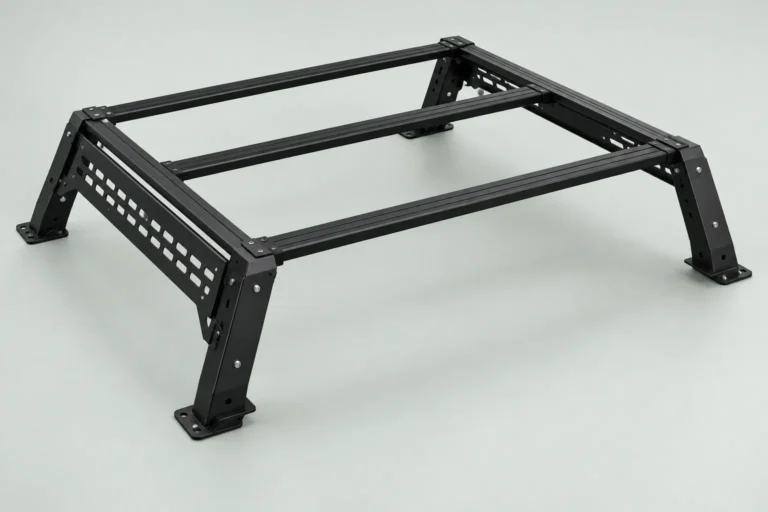
A part may be strong enough not to yield under one load but still deflect excessively, loosen fasteners or fail after many vibration cycles. Geometry, notch effects, welds and interfaces influence these outcomes. For racks, long unsupported spans and joint movement matter; for underbody shields, impact behavior and deformation can be important; for brackets, bolt-bearing and edge distance may govern. The responsible engineer must decide appropriate calculations and tests. Do not infer a safe working load from a manufacturer’s generic product photo or material designation alone.
CNC machining versus cut-and-bent fabrication
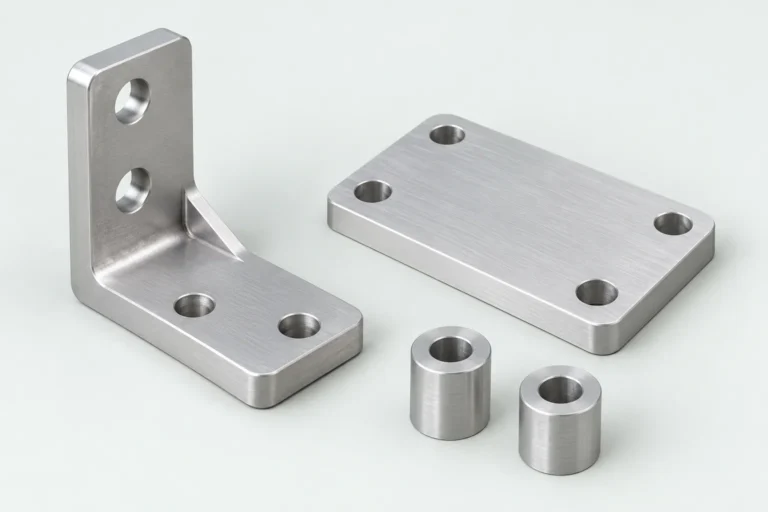
Machined aluminum is often considered for precise adapters and complex small geometries, while cut-and-bent sheet or plate may suit broad panels and tabs. Steel is also machinable, and aluminum is widely cut, bent and welded. The right process depends on shape and output volume. Ask suppliers to describe tool access, material utilization, bending radii, springback, dimensional inspection and finishing sequence. A price comparison between completely different part designs is not meaningful until the buyer confirms that both meet the same functional criteria.
Welding and heat-affected zones need engineering review
Fabricated racks and protection systems may rely on welded joints. Weld quality is not established by a smooth bead photographed under workshop lighting. Material grade, joint design, filler selection, accessibility, welding procedure and local property changes matter. For some aluminum alloys, welding can alter the strength of the affected area; steel joints have their own process and distortion issues. The buyer should require appropriate workmanship criteria and define inspection evidence according to the design’s risk. Ask whether assemblies are inspected before and after coating.
Fasteners and dissimilar-metal interfaces
The part often fails at its connection before the bulk material is exhausted. Bolt specification, thread engagement, washer support, edge distance, clamping area and torque instructions should appear on the drawing or kit specification. When aluminum meets steel or other metals, environmental exposure may require attention to galvanic effects and isolation strategies. Surface treatments and insulating components must be compatible with intended service conditions. Ask factories to quote every fastener and interface component in the complete BOM so buyers do not receive a beautiful bracket with unspecified bolts.
Corrosion protection and maintenance expectations
Bare-metal appearance is not sufficient evidence for a lasting protective system. Steel may require suitable preparation and coating; aluminum may also need a specified finish, especially in severe environments or mixed-metal assemblies. Think about salt exposure, stone chips, threaded interfaces, drain paths, crevices and coating damage during installation. A coating specification should address surface preparation, nominal appearance, coverage and inspection, plus appropriate tests when contractually required. The chosen finish can alter mating tolerances; verify critical holes and contact surfaces after processing.
Packaging, shipping and production damage
Long rails, plates and rack tubes can be costly to move, even when their component mass is reduced. Packaging design should prevent coated surfaces from scratching one another and protect corner geometry, hardware bags and labels. Consider carton dimensions, pallet handling, stacking and mixed-component kits. A factory price per piece is not a reliable landed-cost comparison until packaging, freight basis and the destination are aligned. Imported components also require appropriate tariff and compliance analysis based on actual product classification, not material assumptions alone.
A supplier quotation matrix worth using
Ask both suppliers to quote the same drawing revision and installation function. Required rows should include material grade, finished mass, fabrication or machining stages, welding and finish, dimensional evidence, prototype price, tooling, production quantity breaks, complete hardware kit, inspection and packing. Invite clearly identified alternatives, but never merge them into the main quote without buyer approval. Track any unresolved engineering requirements separately from commercial questions. A lower quote that excludes testing or fasteners is not evidence of a more efficient manufacturer.
Illustrative comparison: a removable cargo bracket
Imagine a distributor evaluating a removable cargo accessory bracket for a pickup. The steel concept uses cut and bent plate; an alternative aluminum concept proposes a different section shape. The buyer provides the same vehicle interface and intended use, then asks designers to establish whether both concepts can satisfy the required stiffness, strength, durability and attachment conditions. Factories explain manufacturability and costs, while the buyer coordinates appropriate sample testing. This is a hypothetical exercise and does not establish either design as fit for use.
When to choose neither proposal yet
Stop before selecting a factory when the load path is unclear, the vehicle interface has not been measured, a safety-critical claim lacks an accountable engineer or the supplier cannot name the material grade. The next useful action may be a better drawing, a revised joint, a reference sample or a planned independent test. Material selection is a technical decision supported by evidence, not a contest between two attractive prototypes.
Frequently Asked Questions
Does aluminum always make the better overlanding rack?
Not necessarily. Finished assembly geometry, strength, stiffness, fatigue, coating, load path and installation interfaces must be evaluated together. A material change requires a design review, not just a thickness substitution.
Is powder coating enough to prevent corrosion?
A coating system is only as useful as its preparation, application, environmental suitability and inspection. Edge coverage, damage during shipping, drainage and fastener interfaces may also require attention.
Can you use a supplier’s claimed capacity in your marketing?
Not without appropriate substantiation for the actual product and application. Load ratings and road-use claims require suitable responsible engineering and test evidence.
Buyer Resources and Next Steps
- Fabricated skid plate and slider sourcing
- Custom manufacturing process guide
- RFQ template and supplier comparison
- Discuss your custom part
For a practical manufacturer discussion, bring your reference product, authorized drawing, application, estimated order quantity and destination. Clarify technical assumptions before relying on any quotation.