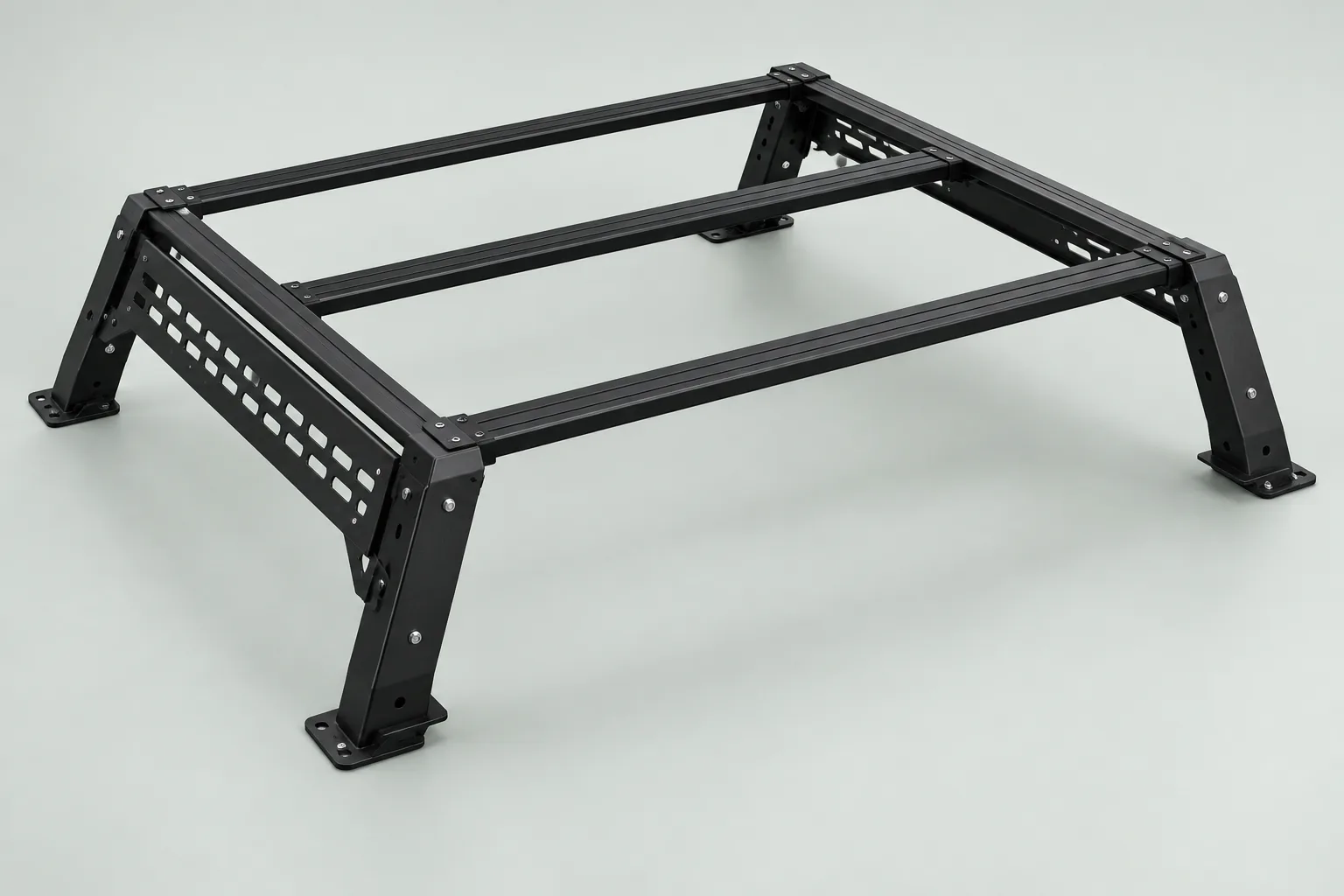
How to Prepare an RFQ for Custom Truck Bed Racks: B2B Sourcing Guide
Custom truck bed racks are not interchangeable accessories. Two racks that look almost identical in a product photo may depend on different bed lengths, rail systems, tonneau covers, mounting hardware and structural assumptions. For importers, aftermarket brands and 4×4 workshops sourcing from China, an incomplete request for quotation (RFQ) can make apparently competitive supplier prices impossible to compare.
This guide explains how to prepare a manufacturing-ready RFQ for a custom or private-label truck bed rack. It addresses the information a prospective manufacturer needs, what should be checked during sampling, and how to keep design, price and responsibility decisions traceable. The principles also apply to crossbars, modular rack side panels and associated mounting brackets.
In this guide
- Quick buyer checklist
- 1. Define the rack project before approaching factories
- 2. Record vehicle application and fitment precisely
- 3. Choose the right level of design definition
- 4. Compare material, fabrication and surface finish
- 5. Ask every manufacturer to price the same scope
- 6. Treat the sample as an approval milestone
- 7. Plan packaging, spares and private labeling early
- 8. Decide who owns each critical approval
- Example: a concise bed-rack RFQ you can adapt
- Common mistakes in custom bed-rack sourcing
- Frequently asked questions
- Next step: turn the project into a comparable supplier brief
Quick buyer checklist
- Identify the exact vehicle platform, model year, cab, bed length and relevant factory rail or accessory system.
- Decide whether the request is to source an existing design, adapt a supplier’s product or manufacture from your own drawing.
- Define the full assembly, including feet, clamps, fasteners, accessory interfaces and packaging.
- Provide dimensions, materials, surface finish, expected usage and required engineering validation.
- Ask for separate quotations for samples, production, tooling, packaging and shipping.
- Specify how fitment, welds, coating and approved drawing revisions will be inspected.
1. Define the rack project before approaching factories
Begin by describing the intended buyer and use case. A lightweight rack for carrying camp accessories may need a different configuration from a full-height rack designed to accommodate roof-top tents, recovery boards and additional mounts. A rack used on-road also faces different operating assumptions from one regularly used on rough tracks. None of those descriptions establishes a safe load rating on its own.
For each request, distinguish the existing product, modified existing design and original drawing routes. Existing designs may offer a shorter sampling path, but they still require fitment and product-data checks. Custom projects introduce drawing revision control, engineering questions and possibly tooling. Private labeling can involve another set of approval points for packaging, instructions and brand presentation.
Write a simple one-paragraph project objective. For example: “Develop a modular bed rack concept for a specified North American pickup configuration, with removable accessory side panels and an interface that does not obstruct the selected tonneau-cover mechanism. Evaluate an initial sample before any production order.” This is a project brief, not a claim that the design is already manufacturable.
2. Record vehicle application and fitment precisely
“Fits Ford Ranger” or “Fits Tacoma” is insufficient for a factory evaluation. Vehicle generations and factory configurations can change critical mounting details. Even within one model year, OEM rail accessories, bed liners, tailgate assemblies and aftermarket covers may influence the interface.
| RFQ field | What the buyer should supply |
|---|---|
| Vehicle identity | Make, model, generation or model year, market, cab and bed configuration |
| Existing hardware | Photos of rails, tie-down points, liners, covers and attachment locations |
| Installation geometry | Mounting-point spacing, hole positions, obstruction zones and available clearance |
| Accessory interfaces | Crossbar, roof tent, awning, board mount or side-panel requirements |
| Changes from stock | Aftermarket tonneau covers, bed slides, lights or other attached systems |
| Fitment evidence | Measurement photos, approved dimensions, installation record or test-fit notes |
Provide photographs with a scale or measured reference wherever useful, but do not treat photo measurements as a substitute for controlled dimensions. If a supplier proposes using fitment data for another vehicle or generation, request an explanation of the common interfaces rather than assuming direct compatibility.
For a detailed input list, use the vehicle fitment data and parts RFQ guide. The vehicle sourcing directory can help identify a starting platform, but a directory entry is not a tested fitment statement.
3. Choose the right level of design definition
An early-stage inquiry may start with photos and a short concept. A quotation for custom manufacture usually needs more. At a minimum, explain whether the supplier is expected to manufacture to an approved design, recommend a design change, or undertake engineering work under a separate agreement.
What belongs in the drawing package?
- Overall rack length, width, height and adjustable range, with units and reference datums.
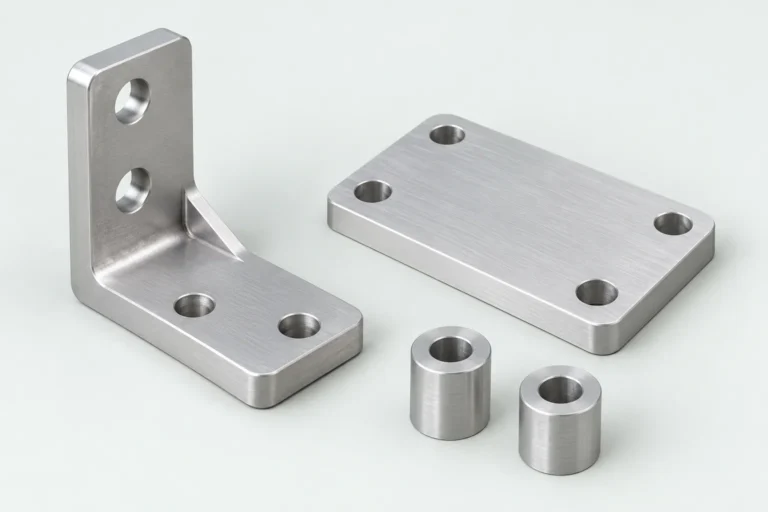
- Mounting-foot geometry, center distances, slots, hole diameters and fastener interfaces.
- Cross-section, wall thickness and plate thickness where defined by the designer.
- Materials and finish requirements, including color, corrosion protection and areas not to coat.
- Required tolerances, particularly on the mating interfaces that control installation.
- Assembly breakdown, part numbers, revision identifiers and a bill of materials where available.
- Important safety or performance requirements and who is responsible for validating them.
Where the design is not final, mark an item as open for manufacturer feedback rather than inserting a guessed number. A supplier’s suggested material substitution or weld change should be reviewed by an appropriately qualified designer before adoption. Product appearance alone cannot verify fatigue behavior or safe attachment under dynamic loads.
4. Compare material, fabrication and surface finish
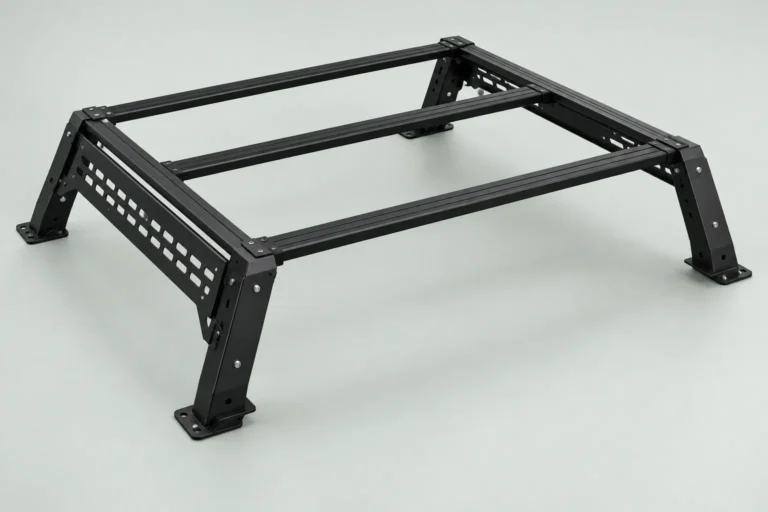
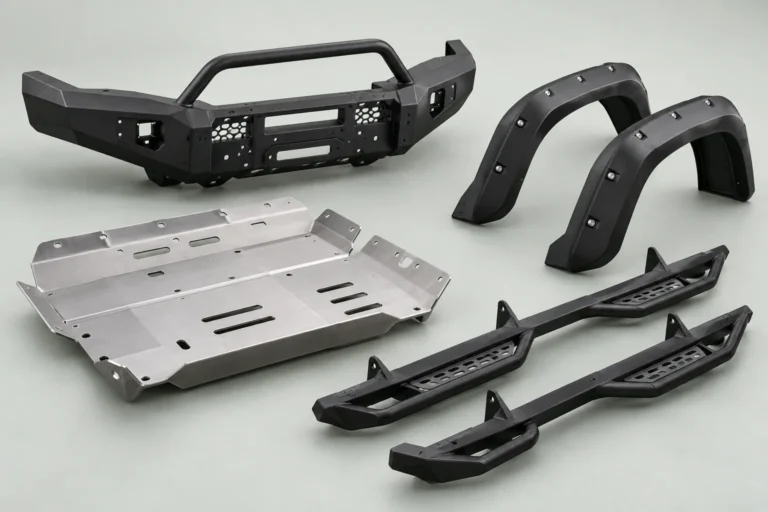
Common rack fabrication routes may include cut and bent steel, welded assemblies, extruded or machined aluminum components, and combinations of these. The correct selection depends on design loads, geometry, weight objectives, manufacturing method and service environment. Steel and aluminum are not inherently interchangeable in a finished design.
When requesting quotations, state the required material grade rather than only “heavy-duty metal.” Ask whether material certificates or traceable purchasing records are available for the job. For welded components, define the relevant workmanship expectations and inspection method. For coated components, request information about pretreatment, coating specification, coverage at edges and joints, and the inspection evidence the manufacturer can provide.
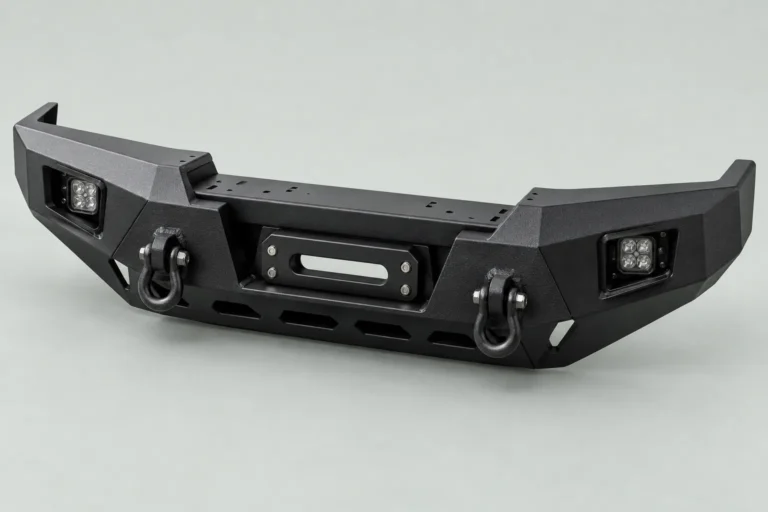
Black powder coating can look attractive in photographs, but visual color alone does not establish adequate corrosion performance. Similarly, a light component does not automatically have an adequate strength-to-weight result for its intended application. Treat performance claims as matters for design review and testing.
5. Ask every manufacturer to price the same scope
Manufacturer comparisons fail when one quote includes all brackets, fasteners and packaging, while another prices only the main rack frame. Send a common RFQ package, then ask suppliers to list exclusions separately. When responses differ, document whether the difference is a technical substitution, a commercial assumption or simply missing information.
| Quotation item | Questions to clarify |
|---|---|
| Product price | What exact assembly, parts and drawing revision are included? |
| MOQ and price tiers | Is the quantity per design, per color, per vehicle model or per purchase order? |
| Prototype and sample | What is the sample scope, fee, review method and delivery arrangement? |
| Tooling and fixtures | Are special jigs required? Who pays, owns and stores them? |
| Lead time | From which milestone is the schedule measured: deposit, drawing approval or sample approval? |
| Quality and packaging | Which inspections, labels, hardware bags and carton protections are included? |
| Trade terms | What Incoterm and named place apply, and which logistics charges remain outside the quote? |
Do not publish a universal minimum order quantity or delivery promise. A welded, vehicle-specific rack can have different economic and tooling constraints from a generic accessory plate. For importers, the total delivered cost may include samples, tooling, inland freight, international transport, customs brokerage, duties and taxes. Agree which party is responsible for each item before placing an order.
6. Treat the sample as an approval milestone
For a vehicle-mounted assembly, the sample stage should do more than check whether the rack looks like the reference photo. It should test the assumptions most likely to cause returns or installation problems. Decide whether the sample will be evaluated by the buyer, a suitable workshop, a qualified engineer or another agreed reviewer.
A practical sample review can include overall dimensions, mounting foot spacing, component identity, weld appearance, coating coverage, fastener count, assembly clarity, and the absence of interference with the intended vehicle configuration. Test fitting should check access to the tailgate, doors, bed cover and mounted accessories where applicable. Engineering load and durability claims require a separately defined validation program; a basic installation check is not a substitute.
Record findings in a revision log. Identify which issues block approval, which may be corrected in the next sample, and what evidence demonstrates closure. Never approve an altered manufacturing drawing solely through an informal message saying that the change “looks fine.”
For a repeatable checklist, see the sample inspection and packaging guide. For document examples, the illustrative sourcing project records show the kind of fields worth tracking; they are templates, not proof of completed orders.
7. Plan packaging, spares and private labeling early
Truck bed racks are often shipped as large, multi-piece assemblies. An otherwise acceptable product can arrive with chipped coating, missing fasteners or poorly identified brackets if packing is treated as a last-minute decision. Ask manufacturers to show the proposed carton arrangement and the protection between metal surfaces. Confirm whether installation instructions, component labels and hardware bags belong to the quoted scope.
For private-label programs, keep product identification, manufacturer information, brand artwork, replacement hardware and user documents under revision control. Confirm authorization for any protected artwork, design or brand property. Where market-specific labeling, warnings or documentation are required, establish who is responsible for researching and approving them rather than assuming the factory automatically covers the destination market.
8. Decide who owns each critical approval
A sourcing coordinator may help communicate drawings, gather quotations, follow sample changes and document factory responses. That does not automatically make the coordinator the product designer, importer of record, certification body or engineer of record. Assign responsibilities explicitly for design validation, testing, compliance review, tooling ownership, product warranties and final acceptance.
If the product is to be sold in the United States or another regulated market, ask the appropriate qualified parties to review relevant safety, product-liability, import and labeling obligations for the exact product. Avoid relying on broad statements such as “all racks are certified” without a named applicable standard, test scope and traceable evidence.
Example: a concise bed-rack RFQ you can adapt
Project: Modular truck bed rack for a defined pickup configuration.
Vehicle: [Make / Model / Year / Trim / Cab / Bed length].
Product route: [Existing design / Modified design / Build from drawings].
Reference package: [Photos, drawing revision, measurements, bracket sketches].
Requirements: [Material, finish, attachment system, accessory interfaces, validation criteria].
Quantities: [Prototype requirement and indicative order volume].
Packaging: [Kit breakdown, hardware bags, instructions and branding if relevant].
Destination: [Country, city or port and requested commercial terms].
Quotation request: Itemized scope, MOQ, sample cost, tooling, lead time, exclusions and proposed next checks.
This example is intentionally incomplete. Use it to start the discussion, then replace placeholders with verified specifications. It is better to show an unresolved engineering question than to give potential manufacturers false precision.
Common mistakes in custom bed-rack sourcing
- Using a model name as the fitment standard: specify the vehicle configuration and verify mounting geometry.
- Comparing quotes with different assemblies: require common bill-of-material and accessory scope.
- Confusing a sample fit with safe working load: define and obtain suitable validation for actual performance claims.
- Approving changes without revision records: identify each sample and production drawing clearly.
- Ignoring packaging and hardware: define cartons, protective material, fastener counts and replacement arrangements.
- Assuming duties and freight are included: use an agreed trade term with a named place and list excluded costs.
Frequently asked questions
Can a manufacturer quote from product photos alone?
Photos and a reference link are often enough for an initial conversation or to locate comparable products. A reliable custom-manufacturing quotation normally requires additional dimensional, material, fitment, quantity and scope information. A supplier may quote a concept study or sample stage separately.
Can you ask a factory to modify an existing bed rack?
Potentially, yes. The feasibility, design rights, fixtures, cost and validation requirements must be confirmed. Changing one mounting foot can affect the assembly, so approved revisions and fitment evidence matter even when much of the frame stays similar.
What order quantity should you request?
Give a realistic prototype quantity and indicative first production range. Ask the manufacturer to quote any meaningful price tiers. Do not assume the MOQ from another factory or category applies to a custom welded assembly.
Should you request a load rating in the first RFQ?
Describe the intended application and performance objectives early. However, any specific rating should be supported by appropriate engineering and test evidence for the defined assembly and installation, not copied from a similar-looking rack.
Is a sourcing partner also the product manufacturer?
Not necessarily. A sourcing partner can help identify prospective manufacturers, structure supplier questions and coordinate quotations and samples. The parties should agree who manufactures, designs, validates and assumes each commercial or technical responsibility.
Next step: turn the project into a comparable supplier brief
Before asking factories for the lowest unit price, prepare a shared RFQ package and decide which open questions must be resolved to make the offers comparable. You can review relevant sourcing categories at Roof Racks & Bed Racks, explore Truck Bed Storage & Cargo Systems, or see how custom manufacturing coordination is scoped.
If you have an existing rack reference, prototype photo, sketch or drawing, send LedgeGear 4×4 your sourcing brief. Include your vehicle configuration, expected quantity and destination if known. The first step is to identify the next manufacturer questions, not to pretend every detail is final.
Editorial note: This article is a procurement and project-planning guide. It does not certify any specific design or establish safe loading, installation compatibility or regulatory compliance. Seek appropriate technical review for those matters.